
Implementing the Reggio Emilia Approach
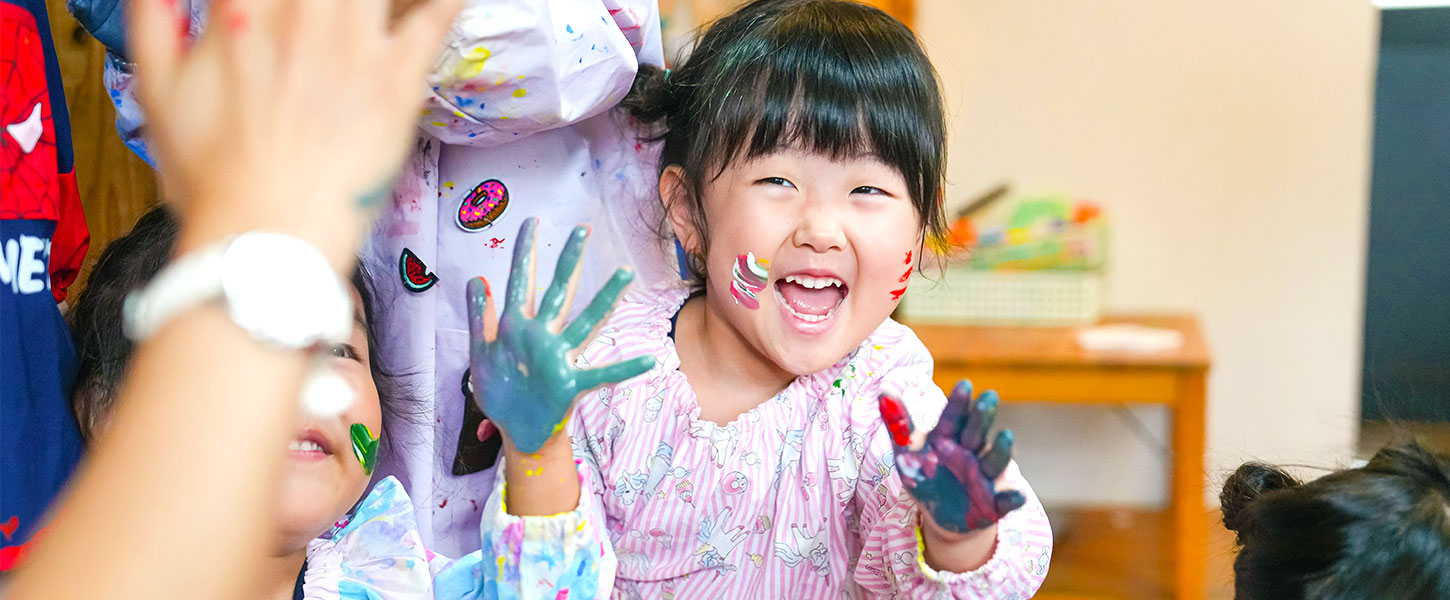
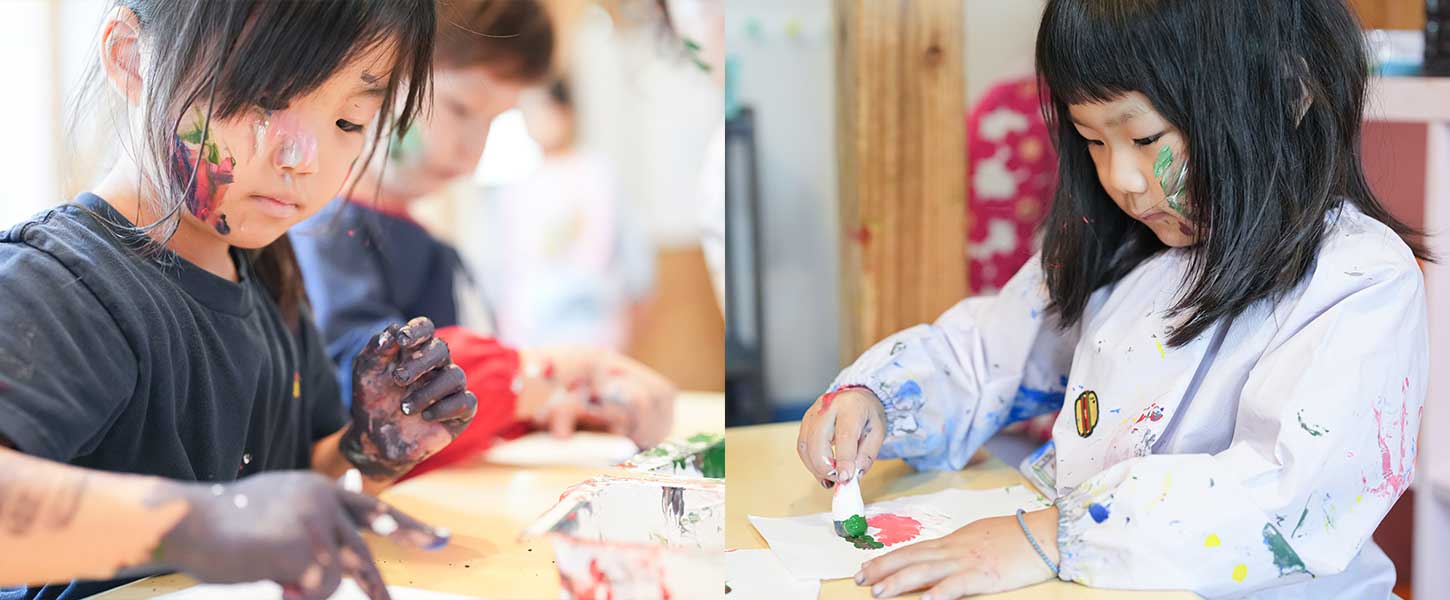
Isn’t it time to move away from the educational environments where children are only praised for doing the “same thing as everyone else”? Children have a hundred different ways of expressing themselves. It is we, the adults, who often suppress ninety-nine of them. Through self-expression via “art”, we provide an environment that nurtures creativity without stifling each child’s individuality, aiming to develop confident, self-assured individuals.
Maximizing Individuality Through ART!
The Reggio Emilia approach was established in the 1950s in the region of Reggio Emilia, Italy.
Inspired by the Montessori method (which focuses on drawing out individual talents), the Reggio Emilia approach integrates “art” to foster collaboration and a sense of community, creating a space where children can work together and build their own learning.
How to Implement the Reggio Emilia Approach in Japan?
In Italy, the entire community is involved in early childhood education, and the region has large spaces and significant budgets to support the integration of “art” (and the training of atelieristas).
In contrast, implementing the Reggio Emilia philosophy in Japan, particularly in the urban environment of Setagaya, Tokyo, has presented some unique challenges. While it’s possible to learn the “how to” of project-based learning and documentation (though even after ten years, it remains a work in progress), adapting this approach in Japan with its vastly different environment is no simple task.
However, since the opening of our school in 2014, we’ve continually thought about how to apply the core Reggio Emilia philosophy—”Children have a hundred languages, and it is adults who suppress ninety-nine of them”—into every aspect of our practice.
What We’ve Achieved So Far
Graduates from our program have shared with us numerous positive experiences, such as:
• Becoming children who can express differences.
• Developing rich imaginations.
• Gaining an understanding of themselves and others, reducing conflicts and increasing empathy.
Through our implementation of the Reggio Emilia approach, we are able to help children realize their own desires and dreams, all while fostering a foundation of mutual respect for differences.


